¡Hablamos Español!

912-200-5230

Veterans’ Disability Compensation for Post-Traumatic Stress Disorder

Veteran Talking to Doctor

Post-traumatic stress disorder (PTSD) is the most common mental health issue experienced by veterans of the United States Armed Forces when they return home from combat.

PTSD is an anxiety disorder that can develop after a service member experiences a traumatic event, also known as a stressor, in which the service member:

  • Was at risk of dying
  • Witnessed another person die or suffer a severe injury
  • Was raped or sexually harassed

In some cases, the service member begins experiencing PTSD soon after the traumatic event. In other cases, PTSD takes months or years to begin affecting a veteran.

Common symptoms of PTSD include:

  • Feelings of intense horror, helplessness or fear
  • Feeling emotionally numb, detached, depressed or disinterested in normal activities
  • Persistent thoughts and nightmares about the event
  • Replaying or re-living the event again and again
  • Constantly watching for danger
  • Avoiding situations that could trigger symptoms
  • Not discussing the event with anyone

Our trusted Savannah veterans’ disability lawyers can help you determine if your PTSD qualifies for benefits.

WHO QUALIFIES FOR PTSD BENEFITS?

If you are a U.S. veteran who suffers from PTSD due to a traumatic event during your military service, you may be eligible for veteran’s disability benefits.

However, you will not qualify for benefits unless you can prove three things, according to 38 Code of Federal Regulations (CFR) §3.304(f):

CREDIBLE EVIDENCE THAT THE STRESSOR OCCURRED

As long as there is no clear and convincing evidence to the contrary, and the stressor in question is consistent with the circumstances, conditions or hardships of your service, the only credible evidence you need is your personal testimony.

This applies to most situations, including those where you were engaged in combat with the enemy, you were a prisoner of war or you were fearful of hostile military or terrorist activity.

However, if your claim is based on an assault that occurred during your service, you may need more evidence, which could include:

  • Service records
  • Records from law enforcement, rape crisis centers, hospitals or mental health centers
  • Statements from roommates, service members, clergy or family members

These pieces of evidence may be used to show behavior changes after the alleged assault. Behavior changes that would be considered credible evidence of a stressor include:

  • Request for a transfer to another assignment
  • Deteriorating work performance
  • Substance abuse
  • Depression
  • Panic attacks
  • Anxiety

In some cases, the Department of Veterans Affairs (VA) will submit evidence it receives to an appropriate medical or mental health professional for an opinion about whether the alleged assault actually occurred.

Other stressors that require corroboration beyond your testimony include:

  • Plane crashes caused by severe weather
  • Severe motor vehicle accidents
  • Witnessing death, injury or threat of injury or death to another person caused by something other than hostile military or terrorist activity


MEDICAL EVIDENCE OF PTSD

You need credible medical evidence that you have PTSD. Your diagnosis must conform to the requirements in the Diagnostic and Statistical Manual of Mental Disorders, Fifth Edition (DSM-5).

EVIDENCE OF A SERVICE CONNECTION

You also need medical evidence showing that the stressor is connected to your service and is the primary cause of your condition and not a preexisting medical issue or another event that was unrelated to your service.

Evidence could include:

  • Service records
  • Evidence of your military occupation
  • Records for hazard pay
  • Service treatment records
  • Military performance reports
  • Monthly summaries and morning reports
  • Verification that you received combat/imminent danger/hostile fire pay


APPLYING FOR VETERANS’ DISABILITY FOR PTSD

You can apply online through the  website or by completing VA Form 21-526 and submitting it to the nearest VA regional office.

You will need to include:

  • DD214 Certificate of Release of Discharge from Active Duty or separation papers from your periods of service.
  • Medical records, including the mental health evaluation performed at a VA facility

You may also want to include Form 21-4138 Statement in Support of a Claim, detailing your personal narrative of the events that triggered your PTSD symptoms. Accounts of family and friends who have witnessed the impact of your PTSD may also be included.

If you are a veteran who is suffering from PTSD related to your service, you may be entitled to various forms of disability compensation. The Nye Law Group will see you through the claims process, working to secure all of the benefits you are entitled.

Call 855-856-4212 or complete our Free Case Evaluation form now.

Why Do I Need a Truck Accident Lawyer After a Georgia Truck Crash?

Truck On Two Lane Highway

If you were injured in a truck crash and are trying to decide whether to hire a truck accident lawyer to manage your personal injury claim, there are few things you need to keep in mind.

After the accident, while you were being treated for your injuries, the trucking company was already hard at work investigating the crash and preparing to defend against your personal injury claim.

Not only does the trucking company have a team of high-priced lawyers and risk managers exploring every legal strategy for denying or devaluing your claim, the company likely has years of experience defending against these claims.

This puts you at a tremendous disadvantage before you have even filed a claim. Fortunately, you have the option of hiring an experienced Savannah truck accident attorney, which can go a long way toward leveling the playing field and defending your best interests.

Here are some of the many ways an attorney can improve your chances of recovering fair compensation.

TELLING YOU WHAT STEPS TO TAKE AFTER THE ACCIDENT

There is often a lot of confusion after a truck accident. Victims may be unsure who to call and what steps to take to defend their rights and begin the process of recovering fair compensation.

This is a big problem because your actions in the aftermath of the crash can go a long way toward determining the success of your personal injury claim. Without proper guidance, you could do something that lowers the value of your claim, like admitting fault or minimizing your injuries.

Contacting a reputable attorney can help eliminate some of your confusion and help you protect your rights. An attorney will instruct you on what your priorities should be and how to deal with phone calls and other communication from trucking companies and their lawyers.

For instance, the first thing you need to do is obtain medical treatment. Listen to your doctors and follow the treatment plan they give you.

You should also try to collect as much evidence as possible, such as pictures of the scene of the crash, medical records and statements from witnesses to the crash.

Then you should contact an attorney to review your claim and find out what to do next.

DETERMINING LIABILITY FOR THE CRASH

While many truck accidents were caused by the driver, there are often many more parties that bear some responsibility for the crash, including:

  • The driver’s employer
  • Owner of the truck
  • Company that manufactured the truck
  • The company that owns the trailer
  • The company that leased the truck
  • Facility that repaired the truck
  • Manufacturer of the trailer
  • Cargo-loading company
  • Government entities

You need a skilled truck accident lawyer who knows how to thoroughly investigate the crash and carefully review police reports, witness statements and other evidence to determine all of the liable parties.

This is arguably the most important way that an attorney can help with a truck crash claim. You cannot recover all of the compensation you are entitled unless you know all of the parties that are responsible for the crash.

NEGOTIATING WITH MULTIPLE PARTIES AT ONCE

If more than one party played a role in the crash, you will have to negotiate with multiple attorneys and insurance companies simultaneously.

Unless you have a wealth of legal knowledge and experience with these kinds of negotiations, it will be almost impossible to negotiate fair compensation from each party.

That is why you need an attorney who has experience with these kinds of negotiations. Your attorney should also have an in-depth understanding of the role each party played in the accident. This helps in determining how much compensation each party owes you.

ENSURING COMPARATIVE FAULT IS APPLIED FAIRLY

Under Georgia’s modified comparative fault law, you are prohibited from recovering personal injury compensation if you bear 50 percent or more of the responsibility for your injuries.

If you are less than 50 percent responsible, you can recover compensation, but the award will be reduced by your percentage of fault for the accident.

The lawyers, risk managers and others representing the defendants will try to assign you the highest percentage of responsible they can.

If you hire a skilled attorney, he or she can help ensure this law is applied fairly, given all of the factors of the case. An experienced attorney will have a detailed understanding of the modified comparative fault system in Georgia and how it should be applied to personal injury claims.

APPLYING TRUCKING INDUSTRY LAWS

Commercial trucking is regulated by agencies such as the Federal Motor Carrier Safety Administration, which holds trucking companies to strict regulations regarding driver qualifications and training.

Federal laws mandate the monitoring of driver activity by trucking companies during long-distance routes to ensure the driver works a safe number of hours and obtains specific hours of sleep. For instance, under FMCSA regulations, drivers who are carrying property can drive up to 11 hours only after 10 consecutive hours off duty.

Trucking companies must also require drivers to obtain a number of training hours before operating a truck alone.

A skilled truck accident attorney is aware of industry laws and can accurately identify violations which contributed to your accident.

The Nye Law Group, our personal injury lawyers in Savannah can provide you with expert representation, seeking fair compensation for your medical bills, lost wages, and pain and suffering.

Your initial consultation with our attorneys is absolutely free and you will not be charged for our services unless we obtain compensation.

Call 855-856-4212 or complete our Free Case Evaluation form today.

Laws And Statutes for Motorcycle Riders in North Carolina

Riding Motorcycle

North Carolina has several laws governing the use of motorcycles on our state’s roadways.

You should review them before you hit the road to make sure you are not engaging in any illegal conduct.

Following these laws can also help prevent motorcycle accidents that could result in death or severe injury.

If you suffer an injury in a motorcycle crash, contact the Charlotte motorcycle accident lawyers at our firm.

MOTORCYCLE LICENSE REQUIREMENTS

All North Carolina motorcyclists are required to have a motorcycle endorsement on their regular, commercial or full provisional license before riding in the state. Motorcyclists must pass four tests to earn this endorsement:

  • Motorcycle knowledge test – This is a knowledge test that covers safe driving practices and traffic laws.
  • Traffic sign test – This is a test where you identify traffic signs by color and shape and explain the meaning of each sign.
  • Vision test – You have to have your vision checked to ensure it meets certain standards. If you have to wear corrective lenses to bring your vision up to required standards, you must wear them every time you ride your motorcycle.
  • Motorcycle on-cycle skills test – Once you pass the other tests, you have to demonstrate your motorcycle-riding abilities. You will have to perform basic maneuvers to show that you can operate a motorcycle safely in traffic.

MOTORCYCLE LEARNER PERMIT

Motorcyclists may obtain their learner permit for 12 months prior to taking the required tests to obtain an endorsement on their license. You will have to successfully complete the vision test, traffic signs test and motorcycle knowledge written test to acquire your permit.

Permits may be renewed for a period of six months.

NORTH CAROLINA’S MOTORCYCLE HELMET LAW

It is illegal for anyone to ride a motorcycle on a North Carolina highway or public vehicular area without wearing a helmet that complies with testing and labeling requirements in Federal Motor Vehicle Safety Standard (FMVSS) 218, according to North Carolina General Statute 20-140.4.

Under FMVSS 218, helmets should have the U.S. Department of Transportation symbol permanently displayed on the back. Helmets should also have the model, size, year of manufacture, and type of shell materials sewn or glued into the interior of the helmet.

North Carolina law also requires that the chin strap of your helmet be securely fastened.

According to the U.S. Centers for Disease Control and Prevention (CDC), helmets saved approximately 1,630 lives in 2013. The CDC also found that helmets reduce the risk of head injury by 69 percent and reduce the risk of death in a motorcycle crash by 37 percent.

MOTORCYCLE LANE SPLITTING AND SHARING

North Carolina law states motorcycles are entitled to the full use of a traffic lane. No other vehicle shall obstruct the motorcycle’s full use of the lane, other than another motorcyclist riding two abreast in a single lane.

The statute also says that:

  • No more than two motorcycles may ride side-by-side in a single lane.
  • Motorcycles are permitted to use state-designated high-occupancy vehicle lanes during stated hours, such as during rush hour.

STREET-LEGAL MOTORCYCLES

Any motorcycle driving in or through North Carolina must be street legal by the state’s standards. This means that motorcycles must be equipped with:

  • One, but not more than two, headlamps
  • Rear lights plainly visible from 500 feet to the rear
  • One working brake operated by hand or foot
  • Turning signals
  • Functioning horn
  • Rearview mirror providing clear, undistorted view at least 200 feet behind you
  • Exhaust system in good working order in compliance with emissions control standards

If you have been injured in a motorcycle accident, call The Nye Law Group’s personal injury lawyers in Charlotte for assistance. We may be able to pursue compensation for the damages you have suffered.

Call 855-856-4212 or complete our Free Case Evaluation form today.

When Does a Dui Conviction Become a Felony in Georgia?

Traffic Stop

If you have been arrested for driving under the influence (DUI), you may be worried that your offense is a felony.

In general, most DUI convictions in Georgia are misdemeanors, putting them on par with moving violations, such as running a red light or causing a minor car crash.

However, there are certain situations where your criminal conviction will be upgraded to a felony. These situations are discussed below.

If you have been charged with a DUI, contact our Savannah criminal defense attorneys for a free consultation.

THIS IS YOUR FOURTH DUI CONVICTION

If this is your fourth DUI conviction since July 1, 2008, it is a felony, according to Official Code of Georgia (O.C.G.A.) § 40-6-391.

The penalties for a felony DUI conviction are much harsher than a misdemeanor conviction, including:

  • Fine between $1,000 and $5,000
  • Imprisonment for one to five years
  • At least 60 days of community service, which may be suspended if the defendant is sentenced to three years of prison
  • Probation for at least five years, minus time spent in prison
  • Completion of a DUI Alcohol or Drug Use Risk Reduction Program within 120 days of being convicted
  • Clinical evaluation and completion of a substance abuse treatment program if it is recommended after the clinical evaluation

YOU CAUSED SEVERE INJURIES OR DEATH

Under O.C.G.A. § 40-6-393 and § 40-6-394, anyone who causes death or severe injury through drunk driving will be charged with felony DUI.

A severe injury is one that causes any of the following medical issues:

  • Depriving the victim of a part of his or her body
  • Rendering his or her body useless
  • Causing serious disfigurement of the body or body part
  • Causing organic brain damage

If you are convicted of a DUI that caused someone to die, you will receive a three to 15-year prison sentence. If you cause someone to suffer a severe injury, you will be sentenced to between one and 15 years in prison.

WHAT IS A DUI IN GEORGIA?

Under Georgia law, you will be charged with a DUI if you are caught operating a motor vehicle with a blood alcohol concentration (BAC):

  • At or above 0.02 percent if you are under 21 years old, the legal drinking age
  • At or above 0.08 percent if you over 21 years old
  • At or above 0.04 percent if you are operating a commercial vehicle


PENALTIES FOR DUI CONVICTIONS

Even though a DUI is often a misdemeanor, it can come with stiff penalties. If it is your first conviction you are subject to:

  • A fine between $300 and $1,000
  • Ten days to 12 months in jail
  • Probation for 12 months
  • A minimum of 40 hours of community service
  • Driver’s license suspension

Penalties for your second and third conviction become increasingly severe. For example, after your third conviction you could spend between 120 days and one year in jail and face a fine between $1,000 and $5,000.

The Savannah criminal defense lawyers at The Nye Law Group can represent you if you have been charged with DUI. We will work to ensure you are treated fairly throughout the legal process.

Contact us now by calling 855-856-4212 or completing a Free Case Evaluation form.

How Much Is My Georgia Personal Injury Claim Worth?

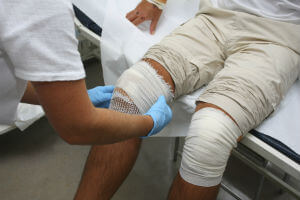
Personal Injury Victim

Every personal injury case is different, but insurers, juries, and attorneys review a lot of the same factors when trying to determine the value of a claim.

Review the six most important factors below and find out why your best chance of obtaining all of the compensation you deserve is to hire an experienced personal injury lawyer in Savannah.

Our skilled lawyers have handled a wide variety of personal injury claims and know how to review all of the details of your claim to determine an accurate valuation.

Here are six of the most important factors in assessing a personal injury claim’s value:

ECONOMIC DAMAGES FROM THE ACCIDENT

These are the economic losses you experienced because of your injury. These all have a defined monetary value. Examples of economic damages include:

MEDICAL BILLS

This includes all past, current and future medical bills from your injury, including the cost of:

  • Emergency room visits
  • Transportation in an ambulance
  • Office visits with your primary care doctor and any specialists
  • Physical therapy
  • Medical imaging, including MRIs, x-rays and CT scans
  • Blood tests
  • Surgery
  • Durable medical equipment you need because of your injury
  • Prescription drugs
  • In-home care

The more severe your injuries, the more medical expenses you are likely to have, and the more money you could recover in your personal injury claim.

However, one issue you may have to contend with is the perception of the severity of your injury. For instance, even though soft tissue injuries such as whiplash can result in severe health problems and create costly medical bills, insurance companies tend to view these injures as less severe than broken bones.

This is the reason why car insurance companies often lowball people making claims for soft tissue injuries, even though these injuries can cost several thousand dollars or more to treat.

The Nye Law Group’s experienced attorneys know how to battle these false perceptions so our clients receive fair compensation for the medical expenses they have incurred.

DOCUMENTATION OF MEDICAL BILLS

When you go to the hospital after your accident, make sure medical professionals thoroughly examine you to discover all of the injuries you have suffered. If the injury is documented, and you are able to prove that it was caused by the accident, you should be able to obtain compensation for any treatment you receive for the injury.

Obtain copies of all medical records of the treatments you receive. You also need to save all bills and receipts for your medical care to show how much all of your medical expenses cost you.

The Nye Law Group’s attorneys can help ensure you have all of the documentation you need to recover the compensation you deserve. We also know how to determine the cost of future medical treatment you will receive that is related to your injury.

LOST WAGES

If you miss work or can no longer do your job because of your injury, you could be entitled to compensation for lost wages and salary both now and in the future.

You can even recover compensation if you used sick days or vacation days on days when you could not make it to work because you were receiving treatment for your injury or were physically unable to work.

Ask your employer to write a letter providing the following information about the time you missed from work:

  • Dates and times you missed work, including full days, half days and partial days missed
  • Your salary or hourly wage
  • Number of hours and overtime you usually work on a normal week

PROPERTY DAMAGE

This most often comes up in car accident claims. If your car was damaged in an accident that was caused by another driver, you should be able to recover compensation to fix your car or replace the fair market value if your car was totaled in the crash.

This also applies to other property damaged in your accident, even if it was not a car accident. For example, you could recover compensation for damage to clothing or real estate.

OTHER OUT-OF-POCKET EXPENSES

Sometimes a personal injury is so severe that you are physically unable to do some of the things you used to do, such as household chores, yard work, taking trips to the grocery store or transporting your children to and from school.

If you have to pay someone to do these things, you might be able to recover compensation for it in your personal injury claim. Make sure you save receipts showing how much you paid and what you were paying for.

NON-ECONOMIC DAMAGES FROM THE ACCIDENT

It is more difficult to determine non-economic damages because there is no monetary value associated with them. There are no receipts showing the monetary amount of physical, mental or emotional suffering you experienced after suffering your injury.

Examples of non-economic damages include:

  • Physical pain
  • Mental suffering
  • Permanent disfigurement or disability caused by your injury
  • Loss of enjoyment of hobbies, exercise or other recreational activities
  • Emotional distress or anguish
  • Loss of companionship because the injury affected your relationship with your spouse or children

Our attorneys can advise you on the best ways to document your non-economic damages, which could include keeping a daily journal where you explain what you are going through.

We have access to medical experts who can explain the damages you are experiencing and help us place a value on them.

Our goal is to recover fair compensation for all of the non-economic damages you have experienced or will experience in the future.

PUNITIVE DAMAGES

These are available only in cases where there is clear and convincing evidence that the defendant displayed willful misconduct, malice, fraud, wantonness, oppression or an entire want of care that makes a judge or jury conclude that the defendant was consciously indifferent to the consequences of his or her actions, according to the Official Code of Georgia (O.C.G.A.) 51-12-5.1.

The purpose of punitive damages is not to provide compensation, but to punish the defendant and deter others from engaging in similar conduct.

Georgia places a limit of $250,000 on punitive damages unless the case involves product liability or intentional actions by the defendant. In those two types of cases, there is no cap on damages.

GEORGIA’S MODIFIED COMPARATIVE FAULT LAW

There are often cases where the plaintiff shares some level of responsibility for his or her injuries. That is why many states, including Georgia, have implemented comparative fault laws.

Georgia’s modified comparative fault law (O.C.G.A. 51-12-33) says that plaintiffs cannot recover compensation if they are 50 percent or more responsible for the accident.

If plaintiffs are less than 50 percent responsible, their compensation award will be reduced by their percentage of fault for the crash. This means that if you are 30 percent at fault, your compensation award will be reduced by 30 percent. In other words, an award of $100,000 would become $70,000.

Courts will apply these rules, and in some cases, so will insurance companies. You need a skilled attorney to build a strong case that ensures you are not assigned more blame for your injuries than you deserve.

CAUSE OF THE ACCIDENT

In the case of car accidents, claims involving drunk drivers or drivers who left the scene of the accident will probably be more valuable than claims involving minor traffic violations.

The more severe the negligence, the more valuable your claim is likely to be. Part of the reason for this is that severe negligence opens the door to punitive damages.

YOUR ACTIONS AFTER THE ACCIDENT

What you do after the accident could have a positive or negative affect on the value of your claim. That is why you should avoid these mistakes:

WAITING TO SEEK MEDICAL CARE

You need to seek medical attention as soon as possible. You do not want to give the defendant or insurance company reason to doubt that your injuries were caused by the accident. That could make settlement negotiations more contentious than they need to be, hurting your chances of obtaining fair compensation or dragging out the process.

NOT CONSULTING AN ATTORNEY

Without an attorney at your side, you could easily get overwhelmed with all of the steps in the insurance claims process and the process of filing a personal injury lawsuit.

You could fail to collect important evidence that increases the value of your claim or shows exactly why the defendant is at fault. You could inadvertently admit fault for the accident to the insurance company, reducing the value of your claim. You could also sign a written statement that unfairly limits the amount of compensation you receive without realizing that you deserve more money.

These are just a few of the mistakes you are at risk of making without an experienced attorney helping you.

The Nye Law Group’s experienced lawyers can guide you through the legal process, protecting your rights at every turn. Unlike the defendant, his lawyers or the insurance company, we are exclusively focused on obtaining fair compensation and doing what is in your best interest.

Schedule a free, no obligation legal consultation today to find out all of the ways we can help you. We work on a contingency fee basis, so we do not receive compensation unless we recover the compensation you deserve.

Contact The Nye Law Group today. Call 855-856-4212 or fill out a Free Case Evaluation form.

CONTACT US

NO PRESSURE. SPEAK TO AN ATTORNEY. NO HIDDEN FEES.

* All Fields Required

Or Call 912-200-5230

CONVENIENT LOCATIONS Throughout the Southeast

402 West Trade Street,
Suite 112
Charlotte, NC

704-285-6319 get directions

1509 Abercorn Street, Savannah, GA 31401

912-200-5230 get directions

402 West Trade Street,
Suite 112
Charlotte, NC

704-285-6319 get directions

1509 Abercorn Street, Savannah, GA 31401

912-200-5230 get directions
View all locations
CONTACT US

NO PRESSURE. SPEAK TO AN ATTORNEY. NO HIDDEN FEES.

* All Fields Required

Or Call 912-200-5230